

What is lacquer painting? Exploring the art of Vietnamese lacquer painting
Lacquer painting stands as one of Vietnam’s most distinctive and revered traditional art forms, celebrated for its intricate techniques and multi-layered polishing process. After centuries of evolution, this artistic medium continues to captivate with its refined beauty, expressive depth, and rich cultural legacy embedded in every creation.
What is lacquer painting?
Lacquer painting is a genre of art that uses traditional Vietnamese lacquer (son ta) as the primary medium. Artists create their work through the repeated application of lacquer layers, each meticulously polished down to gradually reveal vibrant colors and underlying materials. This meticulous process produces unique color effects, remarkable depth, and a glossy surface - all hallmarks that set lacquer painting apart from other art forms.
Distinctive features of Vietnamese lacquer painting
Vietnamese lacquer art is celebrated for its centuries-old history, specialized craftsmanship, and harmonious use of natural materials. These qualities contribute to the medium’s enduring artistic value and timeless appeal.
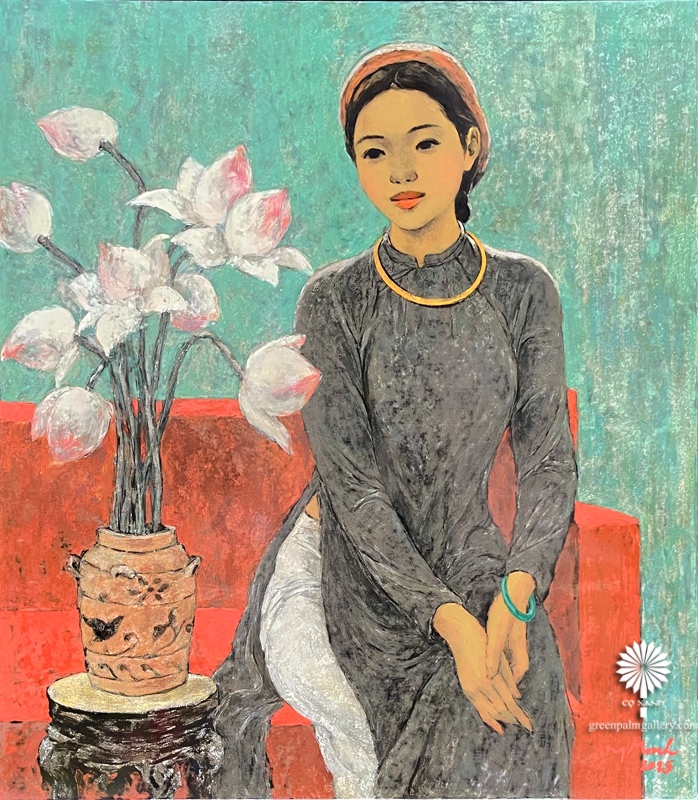
Vietnamese lacquer painting is renowned for its layered technique and time-defying beauty.
The evolution of Vietnamese lacquer painting
The journey of Vietnamese lacquer painting spans multiple eras, evolving from traditional craft into a highly esteemed artistic genre.
- Feudal era: Initially, son ta lacquer was used to craft decorative objects, worship statues, wood panels, and ancestral tablets, valued for its durability and resistance to humidity.
- French colonial period: In the 1930s, artists from the Indochina College of Fine Arts pioneered the innovative fusion of lacquer techniques with Western aesthetics, introducing the multi-layered polishing technique that laid the foundation for modern lacquer painting.
- Contemporary era: Today, lacquer painting is a celebrated hallmark of Vietnamese fine arts. Generations of artists have further developed techniques and artistic language, propelling lacquer painting to national and international acclaim.
How Vietnamese lacquer painting differs from other Asian lacquer art
Vietnamese lacquer painting sets itself apart through material innovation, technique, and uniquely local expression.
- Use of “son ta” lacquer: Vietnamese artists utilize the natural resin of the “son ta” tree in fine art painting, rather than limiting its use to craft objects, as is the case in Japan or China.
- Fusion of diverse materials: Gold leaf, silver leaf, eggshell, and mother-of-pearl are skillfully incorporated to create luminous effects, rich texture, and enhanced depth.
- Exclusive polishing technique: The colors are exposed by wet sanding, providing natural gradients and an extraordinarily smooth, radiant finish.
- Strong Vietnamese identity: Traditional subjects such as rural landscapes, festivals, daily life, and Vietnamese women are prominently featured, reflecting the nation’s spirit and heritage.
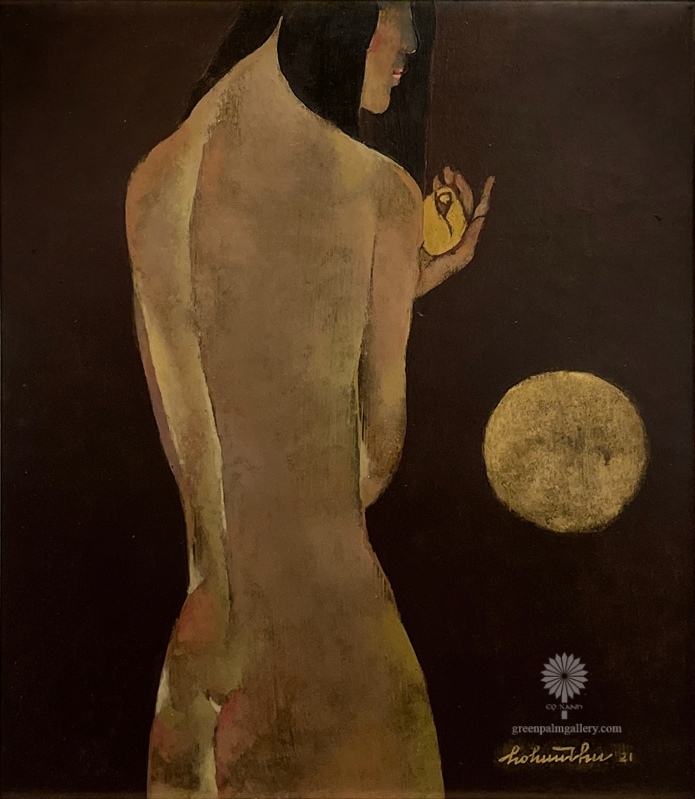
A lacquer artwork combining son ta, gold leaf, and eggshell, adding remarkable depth and texture.
Crafting a lacquer painting: The creative process
Creating a single lacquer artwork demands patience, technical mastery, and meticulous care in numerous manual stages. Every step plays a crucial role in determining the painting’s durability, color, and overall aesthetic value.
Step 1: Preparing the panel
Preparation begins with constructing the foundational wood panel. Multiple coats of son ta lacquer are applied to the wood, reinforced with layers of fabric and fine clay to prevent warping and cracks from humidity. Once the foundation is fully dried - a process that may take weeks - the surface is sanded smooth, ensuring stability for the stages that follow.
Step 2: Sketching and composition
With the panel primed, the artist sketches out the composition and main elements of the painting. Depending on their vision, the artist may introduce gold or silver leaf, eggshell, or mother-of-pearl for visual emphasis and depth. After each layer of lacquer, the painting is left to dry naturally before continuing, with successive layers contributing to the depth and signature visual effects of the medium.
Step 3: Polishing
This is the defining stage of Vietnamese lacquer painting. Using water and fine abrasives, the artist meticulously sands away each layer to gradually reveal the colors and embedded materials beneath, shaping the final image in line with their artistic intent.
Step 4: Finishing and polishing
Once the desired effect is achieved, a final protective coat is applied. The painting is polished by hand, resulting in a glossy, refined surface that preserves color vibrancy over time. The final artwork embodies a particular depth, unique play of light, and sophisticated charm only found in lacquer painting.
Popular genres of lacquer painting
Lacquer painting covers a broad spectrum of themes, from landscapes and portraits to abstraction and still life. Each genre offers its own expressive qualities, suitable for varied display contexts.
Lacquer landscapes
Landscapes are a perennial favorite among artists. Scenes of pastoral villages, rivers, mountains, and iconic landmarks are rendered in warm, earthy tones for a sense of intimacy and nostalgia. The interplay of lacquer layers, gold leaf, and sanding techniques softens light on water, foliage, and sky, imbuing the scene with atmospheric depth.
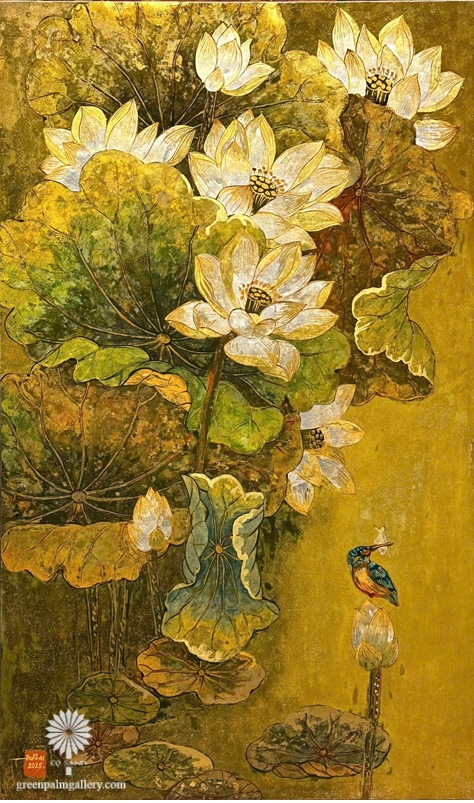
“Kingfisher” by Do Duc Khai vividly captures the elegance of nature in nuanced, deep hues.
Abstract lacquer painting
Vietnamese abstract lacquer painting prioritizes emotion and concept rather than concrete representation. Shapes, colors, and lines are freely composed, with layered lacquer and meticulous hand-polishing creating both surface depth and subtle tonal transitions.
Every painting tells its own story through material and feeling. Instead of a definitive meaning, abstract lacquer works invite viewers to bring personal experience to their interpretation.
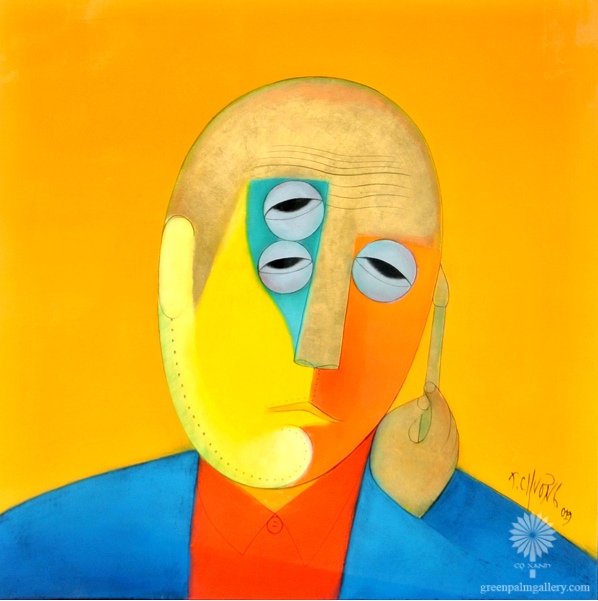
“Self-portrait II” by Nguyen Thanh Chuong leaves a lasting impression with its expressive forms and inventive composition.
Lacquer portraiture
Lacquer portraits focus on the subject’s beauty, presence, and spiritual essence. Vietnamese women, artists, cultural icons, and historical figures are often celebrated themes. Creating a lacquer portrait requires precision in facial proportion, light, and the nuanced interplay of layered color. The polishing process reveals emotional and realistic details while preserving the medium’s signature luster - a testament to the high technical demands of this genre.
Lacquer still life
Inspired by everyday objects - flower vases, ceramics, fruits, antiques - lacquer still lifes showcase harmonious arrangements and rustic charm. The union of traditional materials and the artist’s craftsmanship bestows each piece with subtle beauty and tranquility. Observers are drawn to the serene, peaceful aura emanating from life’s simple delights.
Current lacquer painting prices in Vietnam
The price of lacquer paintings varies significantly, depending on materials, size, technique, and the artist’s reputation. Works made with traditional son ta lacquer and requiring gold, silver, or eggshell accents will command higher prices due to their labor-intensive creation.
On today’s market, decorative lacquer paintings typically range from 3 million to 20 million VND per piece, making them accessible for home, office, or hotel display. Unique original works by renowned artists can fetch from 30 million to several hundred million VND, depending on their rarity, provenance, and artistic value.
Discover the lacquer painting collection at Green Palm Gallery
Green Palm Gallery offers a curated collection of original lacquer paintings by acclaimed Vietnamese artists - ranging from traditional styles to cutting-edge contemporary expression. Each piece presents a unique vision, material, and technique, providing diverse choices for art lovers and collectors.
Dragonfly – Pham Hong Son
“Dragonfly” by Pham Hong Son (120 × 70 cm) features lotus flowers and dragonflies as its central motifs, offering an intimate perspective on nature. The composition places the lotus to the left, with dragonflies dispersed across the surface to create a gentle sense of movement. The minimalist approach emphasizes form and rhythm rather than detailed realism.
The reddish-brown lacquer background highlights the white wings and gold accents on the lotus leaves, providing a balanced visual contrast. The lacquer medium adds depth to the surface while enriching the color’s warmth and sheen. Harmoniously integrated, the lotus and dragonflies evoke peace, rustic charm, and the intrinsic beauty of everyday nature.
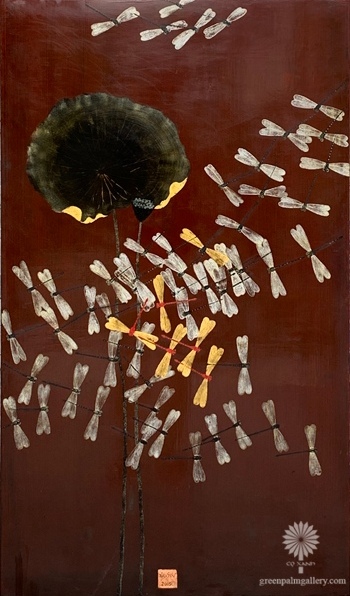
“Dragonfly” by Pham Hong Son brings nature into focus with a minimalist composition.
Under the Moonlight – Bui Quang Thang
“Under the Moonlight” by Bui Quang Thang (60 × 60 cm) depicts two figures sitting side by side beneath a crescent moon. By reducing details and focusing on forms and open space, the artist creates a quiet atmosphere and accentuates the bond between the characters.
The painting employs a muted palette of blues, blacks, and grays, punctuated by touches of gold to balance the composition. Flat color fields, bold outlines, and the profound depth of the lacquer surface infuse the work with both modernity and the medium’s signature warmth.
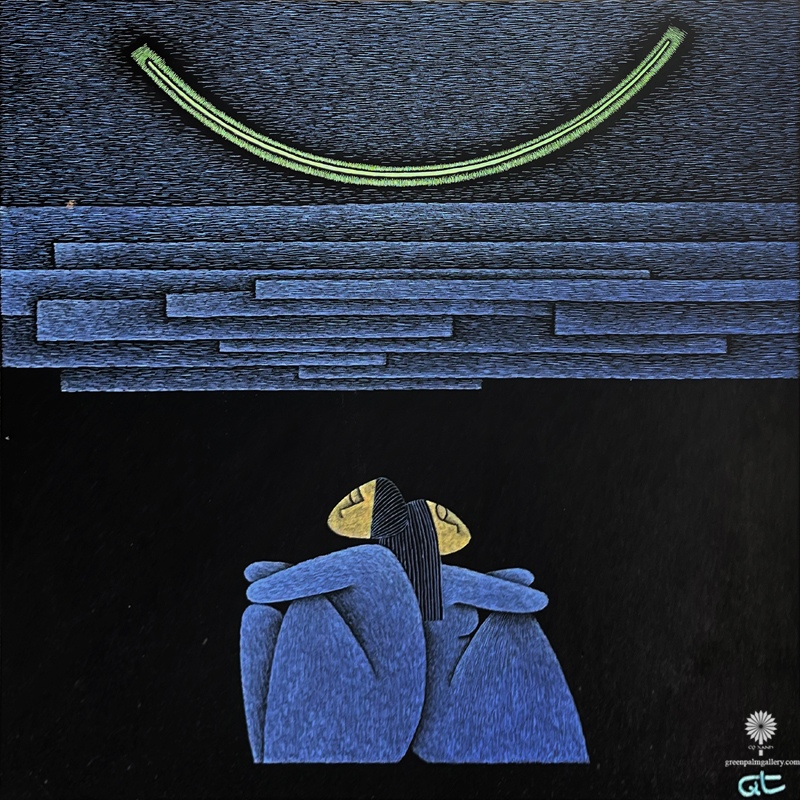 “Under the Moonlight” stands out for its subdued palette and serene ambiance.
New Day – Tran Quang Huan
"New Day" by Tran Quang Huan (100 × 120 cm) depicts a horse-drawn carriage with passengers and goods embarking on a new journey. The multi-layered composition harmoniously arranges human figures and carriage, evoking a lively rhythm and a sense of collective movement.
A bold red lacquer background paired with yellow, black, and brown tones creates depth and energy. Simplified lines emphasize form and dynamism, endowing the painting with life and the vibrant spirit of a new beginning.
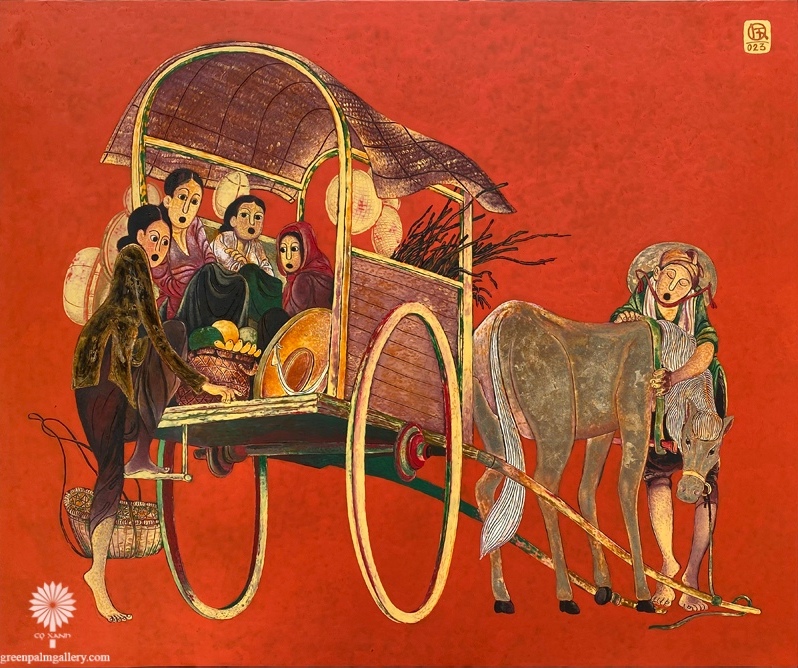 "New Day" captures the energy of a horse-drawn journey in lacquer’s signature red tones.
Interstellar Version I – Ekkehard Altenburger
“Interstellar Version I”, centers on a single geometric form set against a vast black background, resulting in a condensed and striking composition. The shape is divided into small sections of gold, brown, and black, as though constructed from multiple material layers. This approach lends the piece visual depth, even without overt detail or recognizable imagery.
Created by German sculptor Ekkehard Altenburger (b. 1968), the work represents his acclaimed minimalist style, emphasizing sculptural architecture, spatial relationships, and the interaction of materials with light.
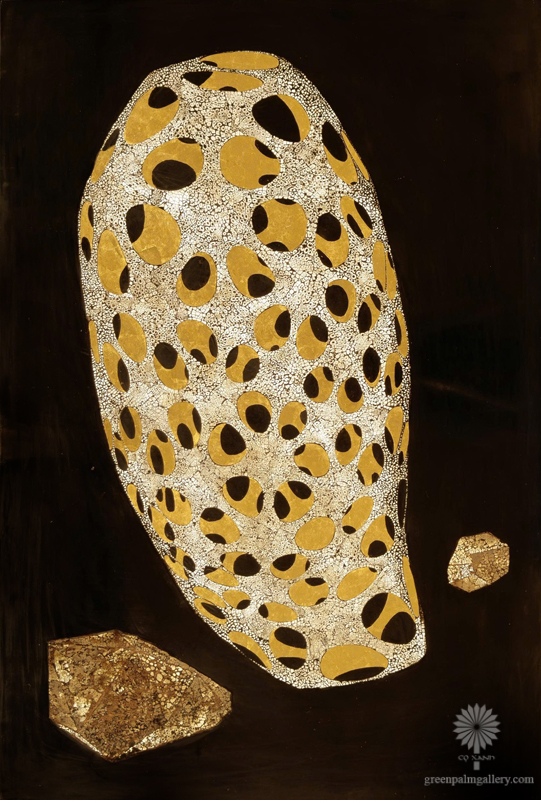 “Interstellar Version I” employs minimalist form to evoke depth on a broad black field.
How to properly display and care for lacquer paintings
To preserve the color, gloss, and lasting value of lacquer paintings, follow these essential lacquer preservative guidelines:
- Avoid direct sunlight: UV rays can fade colors and diminish the surface gloss.
- Maintain stable temperature and humidity: Display the painting in a dry, airy space, away from areas with high humidity or sudden temperature changes.
- Keep away from heat sources: Do not place near kitchens, fireplaces, heaters, or in the direct path of air conditioners, as heat can damage the lacquer surface.
- Clean gently with a soft cloth: Wipe off dust lightly with a moist soft cloth, then dry with a clean, dry one if needed.
- Do not use cleaning chemicals: Solvents and harsh cleaners may damage the lacquer surface.
- Regularly inspect the frame, hooks, and painting surface: Periodic checks help detect early signs of wear or damage for timely maintenance.
Lacquer paintings continue to enchant viewers with their sophisticated craftsmanship and lasting artistic merit. Every piece brings together traditional materials and the unique creativity of the artist, resulting in a beauty that suits diverse display spaces and styles.
|
GREEN PALM GALLERY Gallery in Ha Noi: 39 Hang Gai, Ha Noi, Viet Nam
Gallery in HCM City: 49 Mac Thi Buoi, HCM City, Viet Nam
|