

Exploring the unique characteristics of Vietnamese lacquerware painting
Vietnamese lacquerware painting stands out through its use of natural resin, the labor-intensive multi-layer technique, and the harmonious combination of natural materials to create distinct colors, light effects, and depth. Each painting is the result of a detailed process, reflecting the aesthetic values and identity of Vietnamese art across different periods.
The history of traditional Vietnamese lacquerware
Lacquering has a longstanding tradition in Vietnam, originally serving religious worship objects, Buddhist statues, and handcrafted decor. Craftsmen would apply natural resin harvested from lacquer trees to wooden structures, providing protection against humidity, termites, and the harsh tropical climate. With generations of accumulated experience, lacquer techniques evolved and matured over time.
In the 1930s, artists from the Indochina College of Fine Arts began integrating traditional lacquer techniques into the realm of painting. Building on the foundation of natural lacquer, they experimented with the addition of gold leaf, silver leaf, eggshell, and mother-of-pearl, vastly expanding the creative possibilities of the art form. This marked the transformation of lacquer from a decorative craft into a distinctive painting medium deeply rooted in Vietnamese fine art.
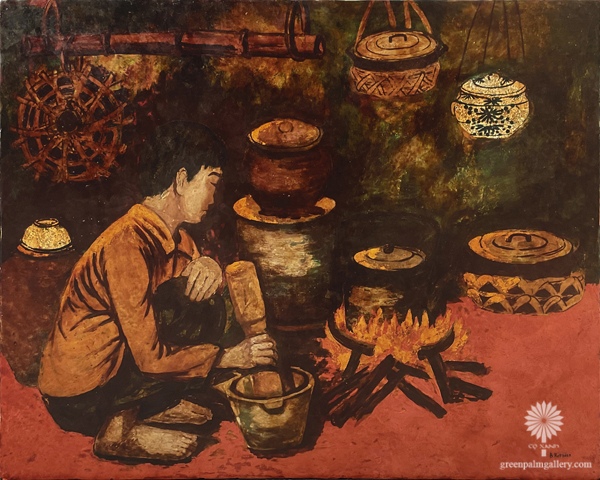 Vietnamese lacquerware painting is distinguished by its intricate, multi-layered technique.
Distinctive features of Vietnamese lacquerware painting
The defining qualities of Vietnamese lacquerware painting are embodied in its use of natural lacquer, its intricate multi-layered process, and the tactile treatment of surfaces with natural materials. Each phase is completed by hand, from preparing the base to applying the final coat, producing color vibrancy and depth rarely found in other painting mediums.
Traditional lacquer: a hallmark of difference
The natural lacquer, derived from the sap of indigenous lacquer trees named “son ta”, is carefully refined and processed before use. Once dried, it forms a durable, subtly lustrous finish with deep, rich hues. Its excellent adhesion and stability in humid, tropical conditions have made it synonymous with Vietnamese lacquerware tradition.
The complex multi-layer technique
The creative process begins by repeatedly applying layers of lacquer onto the base. Between each layer, the artist adds pigments or natural materials as intended, before meticulously sanding the surface to gradually reveal the desired details. This stage is essential in determining the tonality, depth, and captivating play of light within the final artwork.
A fusion of natural materials
Beyond lacquer, artists use gold leaf, silver leaf, eggshell, and mother-of-pearl to as art materials enhance the expressiveness of their creations. Gold and silver add luminous highlights, eggshells create natural white textures, and mother-of-pearl introduces shimmering effects that shift with the viewer's angle. The choice and combination of these materials are guided by each painting’s composition and creative vision.
Themes rooted in tradition
Village life, lotuses, women, seasonal landscapes, and everyday rural scenes are recurring subjects in Vietnamese lacquerware. In addition to depicting familiar imagery, many works also explore emotions, memories, and cultural values through the interplay of color, light, and artistic technique.
Showcase: Exemplary Vietnamese lacquerware paintings
The following are notable lacquerware pieces currently exhibited at Green Palm Gallery. Each demonstrates the unique use of natural lacquer, intricate layering, and traditional materials to produce the signature color, light, and visual depth of Vietnamese lacquerware painting.
Wakefulness - Vu Quoc Dung
“Wakefulness" by artist Vu Quoc Dung, sized 122 × 121.9 cm, portrays a meditative figure surrounded by blooming lotuses and radiant foliage. The combination of vibrant red and gold hues generates a sense of visual depth, evoking tranquility and mindfulness in keeping with the artwork’s central theme.
Traditional beauty is presented through the symbolic lotus and inspiration drawn from Buddhist philosophy - motifs closely tied to Eastern culture. The artist skillfully uses traditional lacquer methods with a red base, fine gold leaf accents, and polished surfaces, highlighting the dignified presence of the figure and the spiritual depth of the composition.
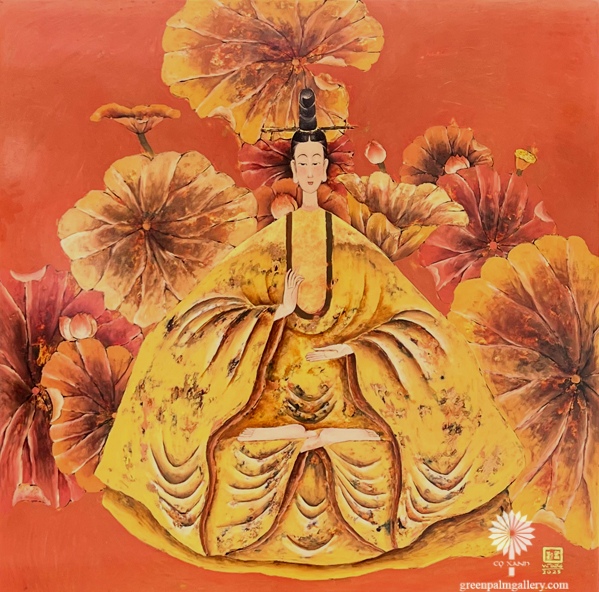 “Wakefulness” uses natural lacquer combined with gold leaf to enhance its depth.
On the side of Duong River – Bui Thanh Lam
“On the side of Duong River” (100 × 100 cm) by Bui Thanh Lam captures the serene ambiance of the Kinh Bac countryside, featuring a tranquil river, a small boat landing, and rows of riverside trees. The gold-leaf background evokes the glow of dusk reflected on the water, blending seamlessly with earthy browns to create a warm and immersive landscape.
Through numerous layers of lacquer, expertly sanded and polished, the tones and lighting emerge uniquely across material surfaces. The painting conveys the rustic calm and gentle rhythm that define life in Vietnam’s northern villages.
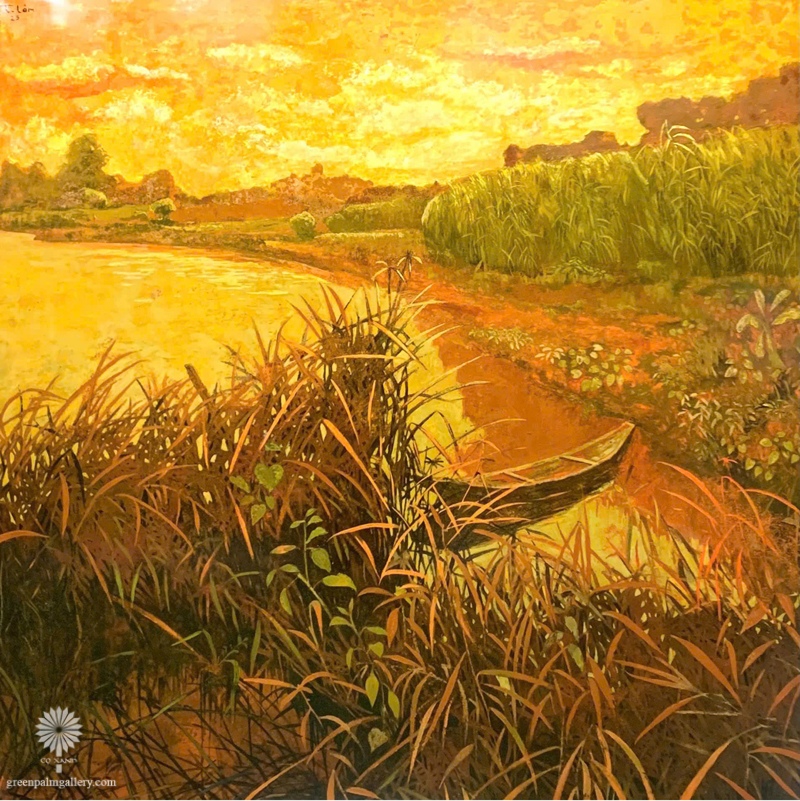 “On the side of Duong River” presents the serene beauty of rural northern Vietnam.
Spring Festival – Bang Nguyen
"Spring Festival" by Bang Nguyen features two highland girls adorned in traditional brocade attire, highlighted with silver jewelry and hand-woven patterns. Its harmonious layout and deep, muted tones characteristic of lacquerware evoke both composure and elegance in the subjects.
The artist uses natural lacquer with gold, silver, and multi-layer techniques to deliver a profound surface depth. The meticulously rendered details in costume and adornment celebrate the cultural richness of mountainous ethnic groups while preserving traditional values in a modern painterly language.
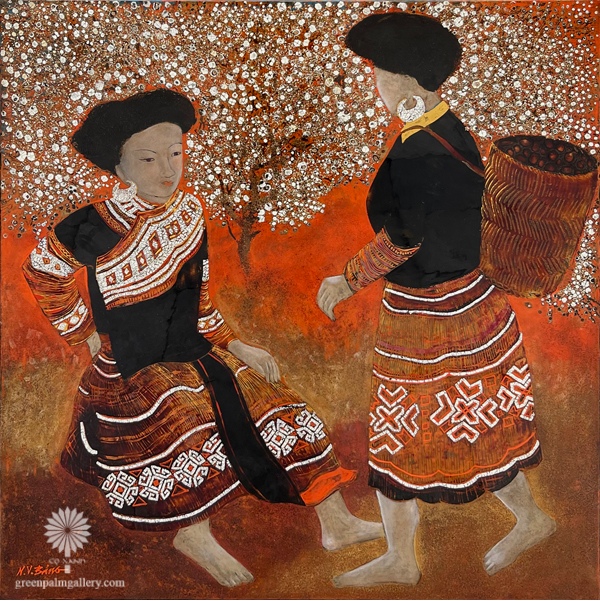 “Spring Festival” captures the cultural vitality of Vietnam's highlands through lacquerware art.
Autumn Afternoon – Pham Hong Son
“Autumn Afternoon” (120 × 70 cm) centers on the imagery of a lotus pond and a swarm of dragonflies. Slender lotus stems emerge from the painting’s edge, while dragonflies drift throughout, creating dynamic movement across the composition.
A restrained blue-grey background sets off the vibrant green of the lotus leaves and shimmering metallic highlights on the lacquer surface. The deliberate arrangement of shapes and negative space, along with the layered technique, imbues the piece with depth without crowding it with details.
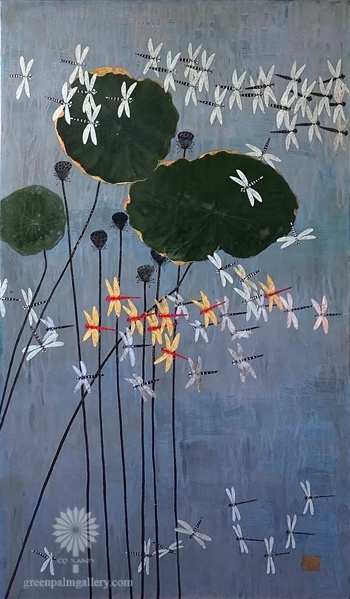 "Autumn Afternoon" weaves together lotus and dragonfly motifs in a balanced, minimalist composition.
The defining characteristics of Vietnamese lacquerware painting are preserved and enriched as Vietnamese art continues to evolve. From material to color and technique, each element contributes to the unique identity of every piece. We invite you to visit Green Palm Gallery to experience our curated collection of Vietnamese lacquerware paintings.
|
GREEN PALM GALLERY Gallery in Ha Noi: 39 Hang Gai, Ha Noi, Viet Nam
Gallery in HCM City: 49 Mac Thi Buoi, HCM City, Viet Nam
|