

Oil Paint vs Acrylic: Understanding their unique qualities
Those of you who love painting are probably no strangers to the concepts of painting materials such as gouache, lacquer, oil paint or acrylic paint. While gouache and lacquer offer completely different experiences, oil paint and acrylic paint are sometimes difficult to differentiate for new viewers. Today, let’s point out the unique features that create the appeal of oil and acrylic paints!
Differences in the history of formation
Oil painting in the history of painting is classical. It was first developed in the 12th century and has been used throughout the history of painting to create many classic works. Such as “Mona Lisa” by Leonardo da Vinci or “Starry Night” by Van Gogh. Although they have a very long lifespan, oil paintings require more steps in cleaning and preserving
Acrylic developed much later and was first produced commercially in the 1950s. Unlike oil paint, acrylic is easier to clean and preserve. Where oil paint is associated with tradition, depth, and permanence, acrylic conveys a sense of openness and immediacy that is ideal for modern explorations in color and texture.
From a historical perspective, the story of acrylic vs oil paint is not just about material differences, it reveals two distinct trajectories in the evolution of artistic expression,one rooted in tradition, the other embodying the innovative energy of the modern era.
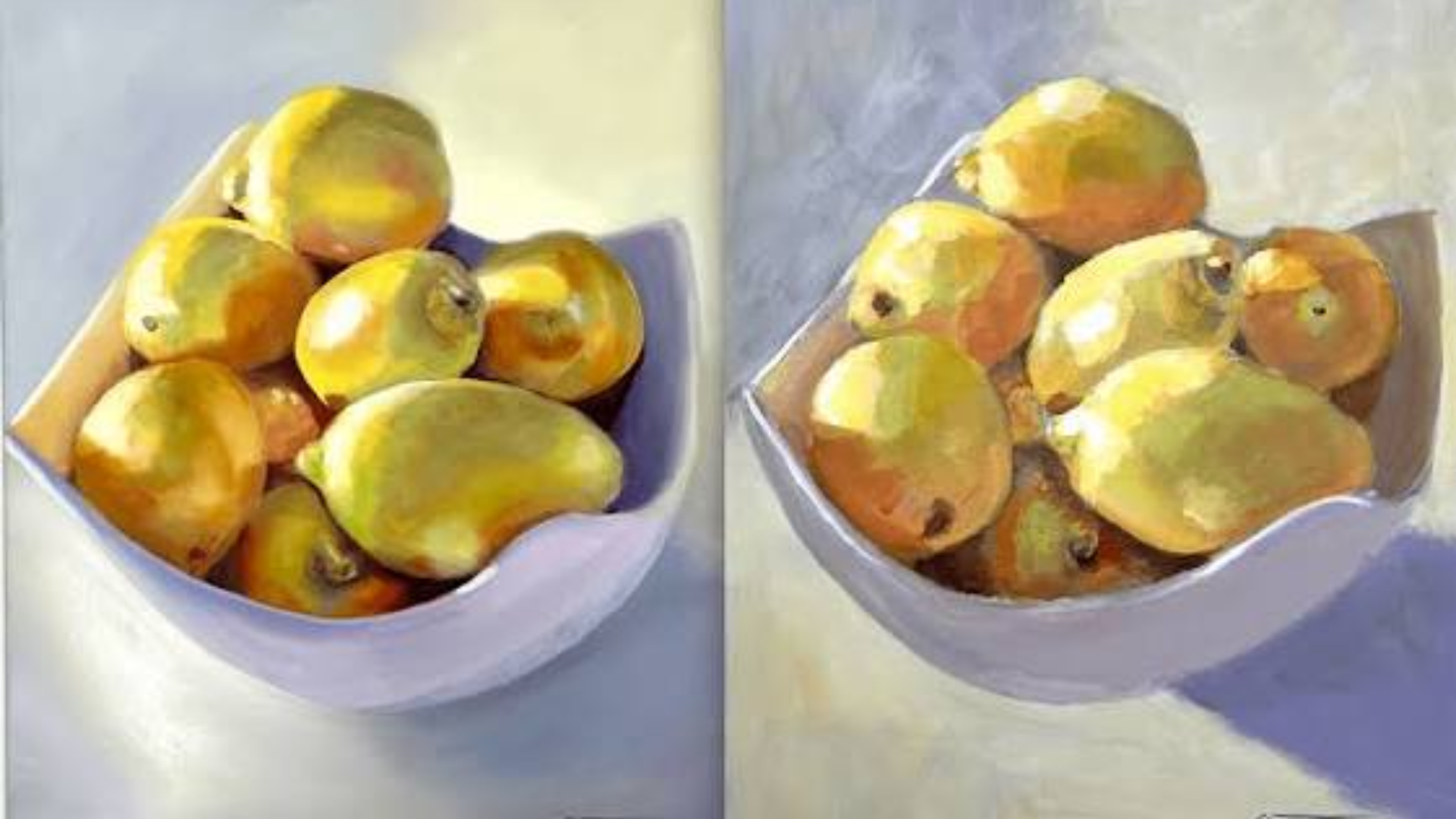 Comparison of an oil painting (left) and an acrylic painting (right)
Key differences: acrylic vs oil paint
Acrylic and oil paint each offer unique properties and challenges:
- The paint film of oil paint is quite resistant to alkaline environments, so it is not suitable for surfaces such as bricks, mortar, concrete, plaster… However, acrylic does not have this problem.
- Acrylic paint film is resistant to low temperatures. At temperatures close to 0 degrees Celsius, it can easily lead to brittleness and cracking. However, oil paint, on the contrary, is quite cold-resistant and can withstand negative temperatures.
- Acrylic is more susceptible to dust than oil paint, more difficult to clean but adheres very well to rough surfaces.
- The lifespan of an oil painting can be up to 500 years (with good quality painting and proper preservation). The lifespan of acrylic paintings under similar conditions is even longer due to the chemical properties used in industry and other factors.
|
Criterion |
Oil Paint |
Acrylic Paint |
|
Historical Use |
Developed in the 12th century, became popular during the Renaissance. |
Commercially produced since the 1950s - a symbol of modern creativity. |
|
Versatility |
Difficult to mix with other media, less experimental. |
Highly versatile, blends easily with other materials and textures. |
|
Odor |
Strong odor can affect health with prolonged exposure |
Low odor, user-friendly and safe |
|
Drying Time |
Can take up to a week to fully dry, allowing for extended changes. |
Dries quickly, changes require scraping away dried layers. |
|
Durability |
Extremely long-lasting, may yellow with age and light exposure. |
Shorter lifespan but stable, vibrant colors. |
Preserving acrylic and oil paintings
Both oil and acrylic works thrive in controlled environments to maintain their color, surface quality, and long-term value. Some essential care tips include:
- Avoid direct sunlight: Display paintings away from direct sun to prevent color fading and surface damage.
- Keep paintings in a well-ventilated, dry area: Excess humidity, especially in tropical climates, can harm canvases, frames, and paint.
- Minimize sudden temperature changes: Both mediums require stable temperatures and should not be placed near heat sources, stoves, or cold drafts.
- Refrain from touching the painting surface: Natural oils, sweat, and debris can mar the artwork. Always handle by the frame or edges.
- Clean with gentle tools: Use a soft brush or dry microfiber cloth to remove dust. Avoid moisture or cleaning chemicals unless advised by a professional.
- Seek expert help for damage: If you notice cracks, flaking, or heavy soiling, consult a reputable gallery or conservation specialist rather than attempting repairs yourself.
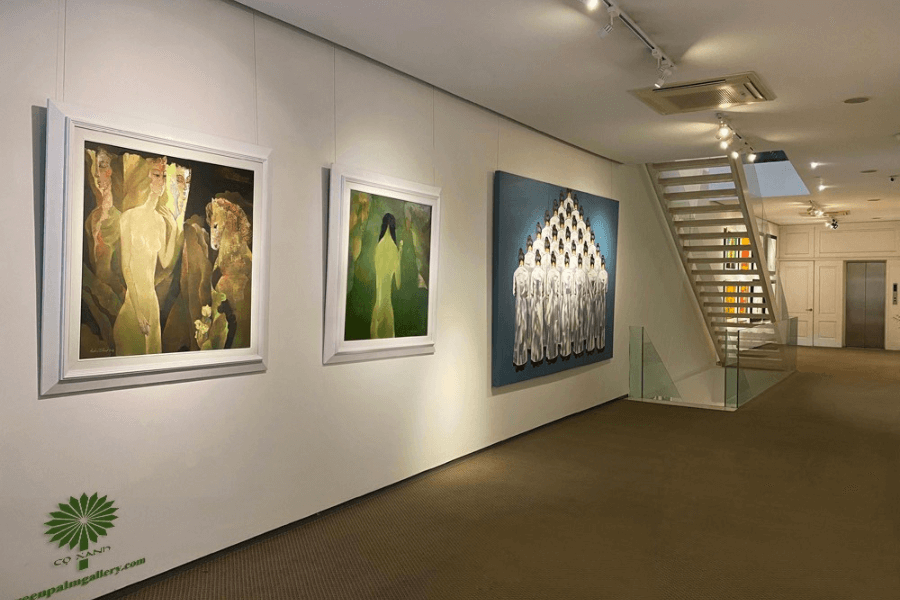 Both oil paintings and acrylic paintings should be kept in a cool, dry environment
Spotlight on: Acrylic and oil artist
Noteworthy oil artists
Nguyen Thanh Binh
Born in 1954 in Hanoi and a graduate of the Vietnam College of Fine Arts and Ho Chi Minh City University of Fine Arts, Nguyen Thanh Binh is celebrated for his romantic realism. His signature works depict gentle, poetic scenes of women, students, ballerinas, and mothers with a restrained palette and tranquil composition.
Notable works showcased at Green Palm Gallery: Break Time, Chorus, Teacher and Students, The Conductor,...
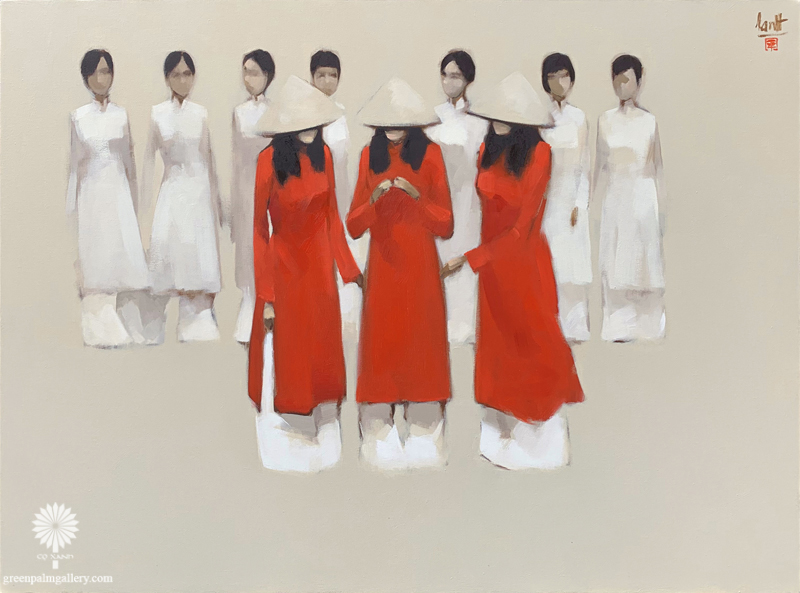
"Teacher and Students," an oil painting by Nguyen Thanh Binh
Hoang Phuong Vy
A 1962 Hanoi native and member of both the Vietnam and Hanoi Fine Arts Associations, Hoang Phuong Vy is known for his playful, 'naive' style. His joyful paintings of children, animals, and daily life brim with innocent colors and simple yet evocative compositions.
Featured works at Green Palm Gallery: Symmetry, Favourite Melody), Little Tiger,...
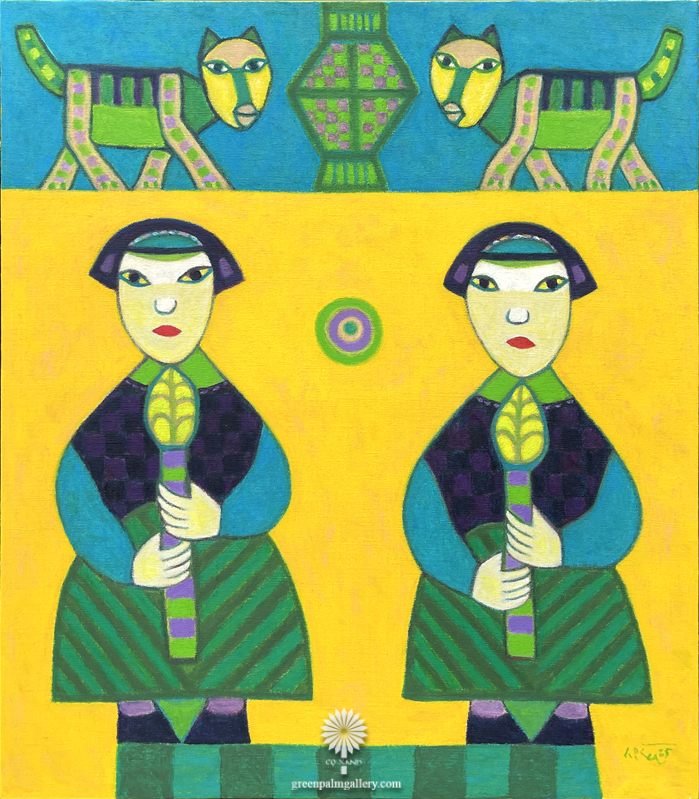
"Symmetry", an oil painting by Hoang Phuong Vy
Dao Hai Phong
Born in 1965 in Hanoi, dao hai phong is a leading figure in Vietnam’s Doi Moi contemporary art movement. Starting his independent practice in 1992, he creates dreamlike landscapes that evoke memory and tranquility, often featuring houses, lakes, moons, and trees as motifs.
Highlighted works at Green Palm Gallery: Blue Fog, Pink Spring, Celebrate the sunset together, Autumn Night, Ripening season,...
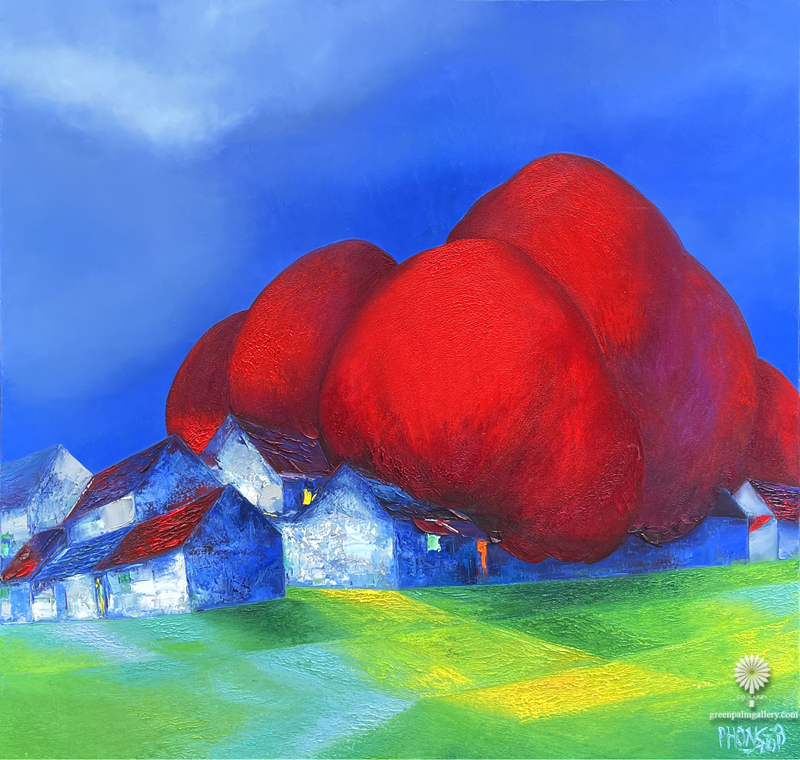
Oil painting "Ripening Season" by Dao Hai Phong
Prominent acrylic artists
Nguyen Thi Hoai Thuong
Born in 1987 in Quang Nam and a 2010 graduate of Ho Chi Minh City University of Fine Arts, Nguyen Thi Hoai Thuong’s acrylics celebrate nature, lush gardens, and the ever-changing seasons. Her bright, emotional palette and spirited brushwork bring landscapes to vivid life.
Selected works at Green Palm Gallery: Garden of Dreams, Fruit Season, Autumn symphony,...
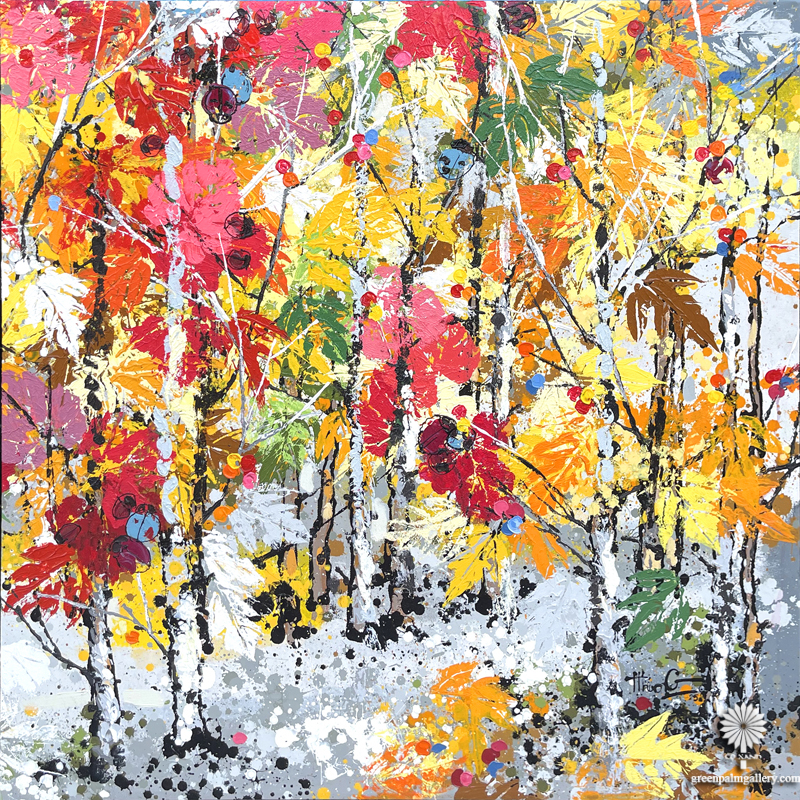
"Garden of Dream" an acrylic on canvas painting by Nguyen Thi Hoai Thuong
Truong Sang
A 1980 native of Bac Kan, Truong Sang is a member of the Vietnam Fine Arts Association and trained at Vietnam Bac College of Culture and Arts, as well as Vietnam University of Fine Arts. His acrylic paintings artfully blend traditional northern mountain culture with contemporary sensibilities, resulting in playful, story-rich images.
Gallery highlights: Under the Moon, Joyful Day, Feeding Pigs, Sweet Melody…
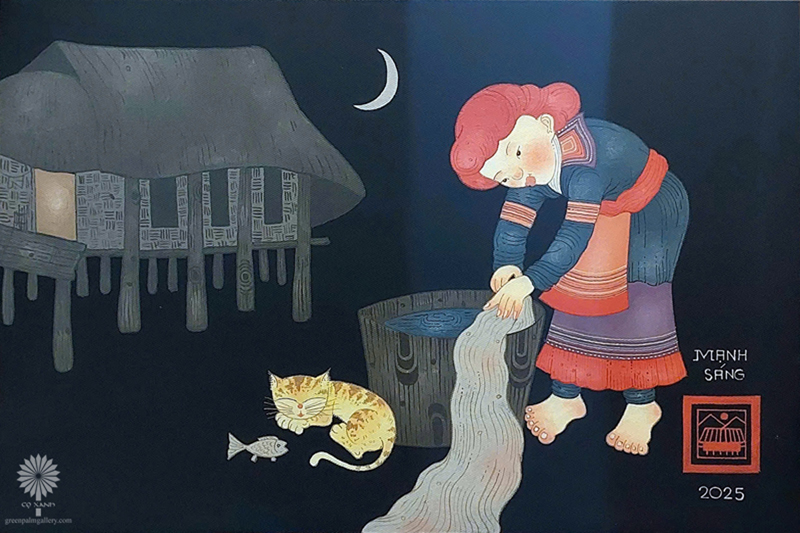
"Under the Moon" an acrylic on canvas painting by Truong Sang.
La Quy Tung
Born in 1966 in Ho Chi Minh City and an alumnus of Ho Chi Minh City University of Fine Arts, La Quy Tung’s abstract acrylic works are distinguished by their exploration of color, symbols, form, and negative space. His visual structures prompt deep contemplation and imaginative encounters.
Featured pieces at Green Palm Gallery: Plus 0 2023, Plus 0 2022 II, Dancing colour,...
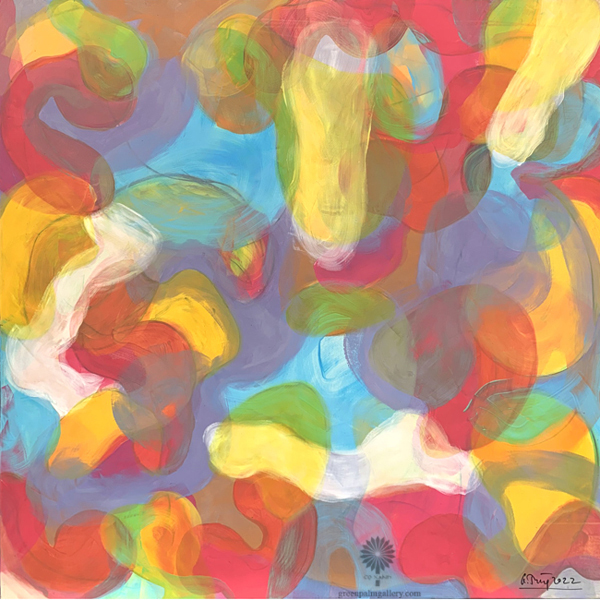
"Dancing Colour" an acrylic on canvas painting by La Quy Tung
Both oil and acrylic paint offer unique charm in the world of fine art. Ultimately, choosing between them isn’t about finding a "better" medium but discovering which piece speaks to your aesthetic and resonates with the mood of your space.
If you wish to experience firsthand the distinct character of acrylic vs oil paint, explore Green Palm Gallery’s curated collections at our Hanoi and Ho Chi Minh City locations or journey through our online collection to find the perfect work, artist, and medium that reflects your personal style.
|
GREEN PALM GALLERY – Phòng tranh Cọ Xanh Gallery in Ha Noi: 39 Hang Gai, Ha Noi, Viet Nam
Gallery in TpHCM: 49 Mac Thi Buoi, HCM City, Viet Nam
|