

Lotus oil painting and unique expressions in Vietnamese art
The lotus oil painting embodies the harmony between a deeply rooted Vietnamese cultural symbol and the expressive possibilities of oil as a medium. More than decorative pieces, lotus oil paintings stand out for their aesthetic appeal while carrying profound cultural and artistic meanings.
The symbolic significance of the lotus in oil painting
In Vietnamese cultural consciousness, the lotus is closely associated with purity, simplicity, and nobility. Emerging from mud to bloom elegantly above water, the lotus is revered as a symbol of resilience, innocence, and the ability to preserve virtue amidst changing circumstances.
This emblem has become one of the most enduring themes in Vietnamese art, adapting seamlessly from traditional to contemporary styles. The lotus motif lends itself to a wide range of interpretations - from realistic to expressive, minimalist, or abstract approaches.
With oil painting, the subject of the lotus attains even more depth thanks to the properties of the medium. Oil paint allows for the building of color layers, nuanced tonal transitions, light effects, and richly textured surfaces. The green of the lotus leaf need not be a single shade, petals can shift between pink or white depending on light, setting, and the emotions the artist wishes to convey. As a result, lotus oil painting both remains deeply connected to Vietnamese tradition and adapts fluidly to contemporary artistic languages.
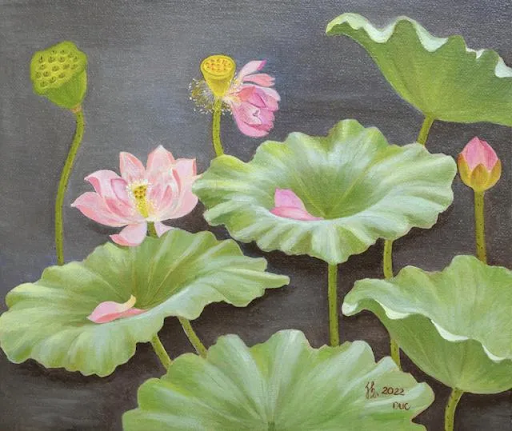
The presence of the lotus motif through different streams of Vietnamese painting, and especially within oil painting
Popular styles and themes of lotus oil painting
By artistic style
Lotus oil paintings may be explored through a diversity of styles:
- Realistic lotus oil painting: These works focus on faithfully rendering the forms of lotus flowers, leaves, stems, water, and natural light. Attention to lines, tones, and details highlights the familiar beauty of the lotus in everyday life.
- Impressionist lotus oil painting: Prioritizing the play of light, color, and atmosphere over precise detail, this style uses bold brushwork and vibrant color fields to evoke the lively movement and mood of the lotus pond.
- Semi-abstract lotus oil painting: Here, the lotus remains recognizable but may be stylized or simplified. Color planes, surface texture, and composition become central, striking a balance between familiar imagery and contemporary art language.
- Abstract lotus oil painting: In this style, the lotus is transformed into evocative color blocks, lines, or shapes. The viewer may not see a literal lotus, but engages with the theme through overall color rhythm and emotional resonance.
By subject matter
In addition to artistic style, lotus oil paintings can also be categorized based on their main visual elements:
- Lotus pond landscapes: These paintings capture wide views featuring water, lotus leaves, blossoms, and surrounding scenery. The compositions evoke a sense of spaciousness, serenity, and closeness to nature.
- Lotus still life: Lotus flowers are arranged in vases, bouquets, or deliberately composed branches within more compact layouts. This type emphasizes form, color relationships, and structural balance.
- Lotus and female figure: Paintings that pair the image of a woman - often in traditional áo dài dress - with the lotus, blending human beauty with nature. The mood can be gentle and nostalgic or highly symbolic, depending on the artist’s vision.
- Lotus with birds, fish, or other natural elements: The lotus is joined by fish, birds, or landscape details, which add dynamism and enrich the narrative dimension of the artwork.
- Lotus amid daily life or architecture: Some works embed the lotus in settings such as rural villages, vernacular architecture, or everyday backdrops, highlighting the connection between the lotus and Vietnamese cultural identity.
By color palette
Color plays a vital role in shaping the emotional tone and visual impact of a lotus oil painting. Common groupings by dominant colors include:
- Pink lotus oil paintings: Soft pink petals often stand out against the green leaves and water, creating a delicate, radiant focal point. Depending on color harmony, the mood may be bright, gentle, or contemplative.
- White lotus oil paintings: White lotuses convey purity and lightness. Combined with green, grey, or muted brown shades, their white petals can become a luminous focal element.
- Lotus paintings in green tones: Green hues - from leaf green to blue green - may dominate, especially in lotus pond and water scenes. This palette brings coolness, calm, and depth.
- Black-and-white or monochrome lotus paintings: Artists may restrict the palette to shades of black, white, gray, or a single hue, directing focus to form, line, contrast, and structure.
Ideal spaces for displaying lotus oil paintings
With their adaptable imagery and diverse palettes, lotus oil paintings suit various interiors. To fully appreciate their aesthetic value, however, factors such as size, color, lighting, and viewing distance should be carefully considered.
Green Palm offers recommendations for displaying lotus oil paintings in different settings:
- Living room: Arguably the best location to showcase a lotus oil painting. A medium or large piece can serve as a striking centerpiece, especially when placed above the sofa or in a prominent spot. Artworks that complement your décor will infuse the space with elegance, warmth, and dimension.
- Home office: Lotus paintings with airy compositions and soothing or neutral colors can provide a sense of tranquility for workspaces. Medium-sized pieces are preferable - avoid overcrowded displays or overly intense colors in smaller rooms.
- Reading nook or study: Minimalist or contemplative lotus paintings, especially those in deep greens, blues, or whites, are ideal for reading corners, creating a peaceful and inviting atmosphere.
- Bedroom: In bedrooms, lotus oil paintings in gentle tones with balanced compositions and minimal contrast can contribute to a restful space. Choose pieces that evoke calm and avoid overly vibrant colors or intricate arrangements.
- Restaurants, hotels, and resorts: Lotus-themed paintings evoke a subtle Asian spirit and recall Vietnamese cultural beauty. Depending on the interior style, you can select lotus pond landscapes, still lifes, or modern interpretations.
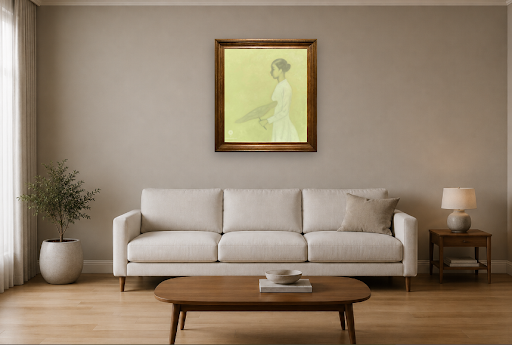
Lotus oil paintings are suitable for a wide variety of interior spaces.
Featured lotus oil paintings and artists
Young Woman with Lotus Flower - To Ngoc Van
To Ngoc Van (1906–1954) ranks among the most influential artists shaping modern Vietnamese art. His mastery of oil painting introduced Western techniques to Vietnamese themes, especially through iconic images of graceful women often accompanied by floral motifs.
In Young Woman with Lotus Flower, a woman in a traditional áo dài gently leans over a vase of lotuses, capturing a moment both intimate and refined. The subdued, time-worn palette and distinctive oil technique of early 20th-century Vietnamese painting do not render the work old-fashioned; instead, they evoke nostalgia and lend enduring aesthetic value.
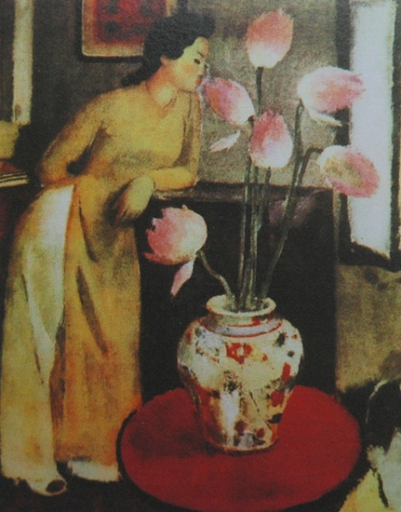 Young Woman with Lotus Flower, a famous painting by the renowned Vietnamese artist To Ngoc Van
Pink Sunshine - Dang Phuong Viet
Known as Viet “Lotus” Dang Phuong Viet has devoted much of his artistic career to the image of the lotus, exploring it in both oil and lacquer. His energetic brushwork and expressive palette render the lotus not only as a symbol of purity but also as a unique signature in his artistic journey.
In Pink Sunshine, Dang Phuong Viet captures the many stages of the lotus - from closed buds, unfolding petals, and full bloom to scattered stamens and visible seed pods. These forms vibrate against a lively interplay of reds, pinks, purples, and greens, resulting in a vibrant and dynamic composition.
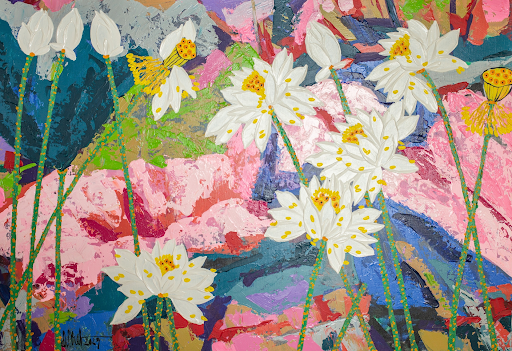
Lotus flowers bloom with radiant brilliance in Pink Sunshine by Dang Phuong Viet.
Young Lady And Lotus - Ho Huu Thu
Ho Huu Thu (1940–2024), a graduate of the National College of Fine Arts Saigon and an active member of the Sai Gon Young Artists Association, contributed significantly to Southern Vietnamese art before 1975. Over his decades-long career, oil painting was a fundamental element of his work.
In Young Lady And Lotus the familiar pairing of a woman in đàn áo dài and the lotus takes on a striking energy. The girl and lotus stems seem to move in opposite directions, infusing the composition with tension and highlighting not only outward beauty but also the inner strength of the woman.
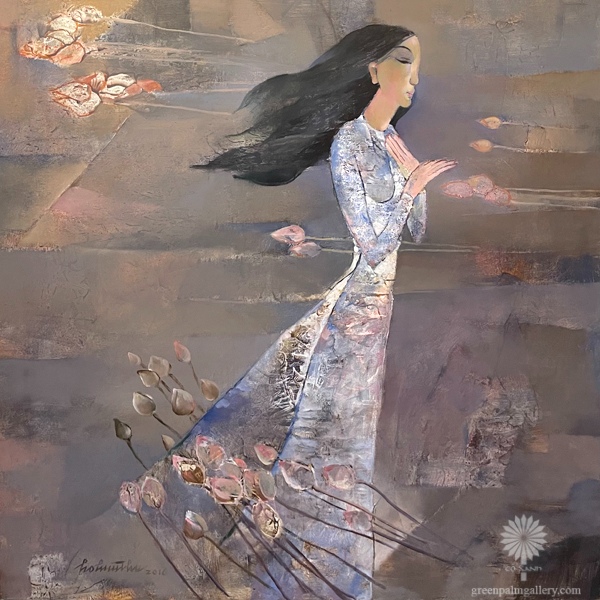 The outer and inner beauty of Vietnamese women is delicately portrayed in Young Lady And Lotus by Ho Huu Thu
Lotus Season - Le Huu Ich
Le Huu Ich (1968–2019) is recognized for his distinct contribution to contemporary Vietnamese painting, especially through depictions of women. His muses often possess a soft, enigmatic, and introspective beauty.
In Lotus Season the artist suggests the season not through blooming flowers but through lush green lotus leaves, focusing the viewer’s gaze on the backs of two women in traditional dress. The muted colors evoke memories of countryside lotus seasons and the youthful vibrancy of women harmonizing with the spirit of blossoming lotuses.
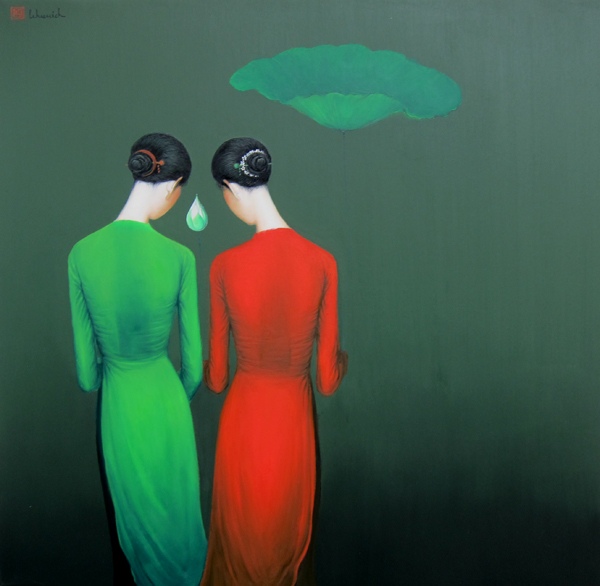
In Lotus Season, the lotus is rendered in a suggestive and evocative manner rather than as a realistic depiction
Directly experiencing a lotus oil painting brings an appreciation that surpasses what can be felt through digital images, revealing nuances of color, brushwork, real-life scale, and the painting’s interaction with light. Art lovers are invited to discover the diverse selection of lotus oil paintings at Green Palm Gallery or schedule a personalized consultation to select pieces best suited to their space and aesthetic sensibilities.
|
GREEN PALM GALLERY Gallery in Ha Noi: 39 Hang Gai, Ha Noi, Viet Nam
Gallery in HCM City: 49 Mac Thi Buoi, HCM City, Viet Nam
|